
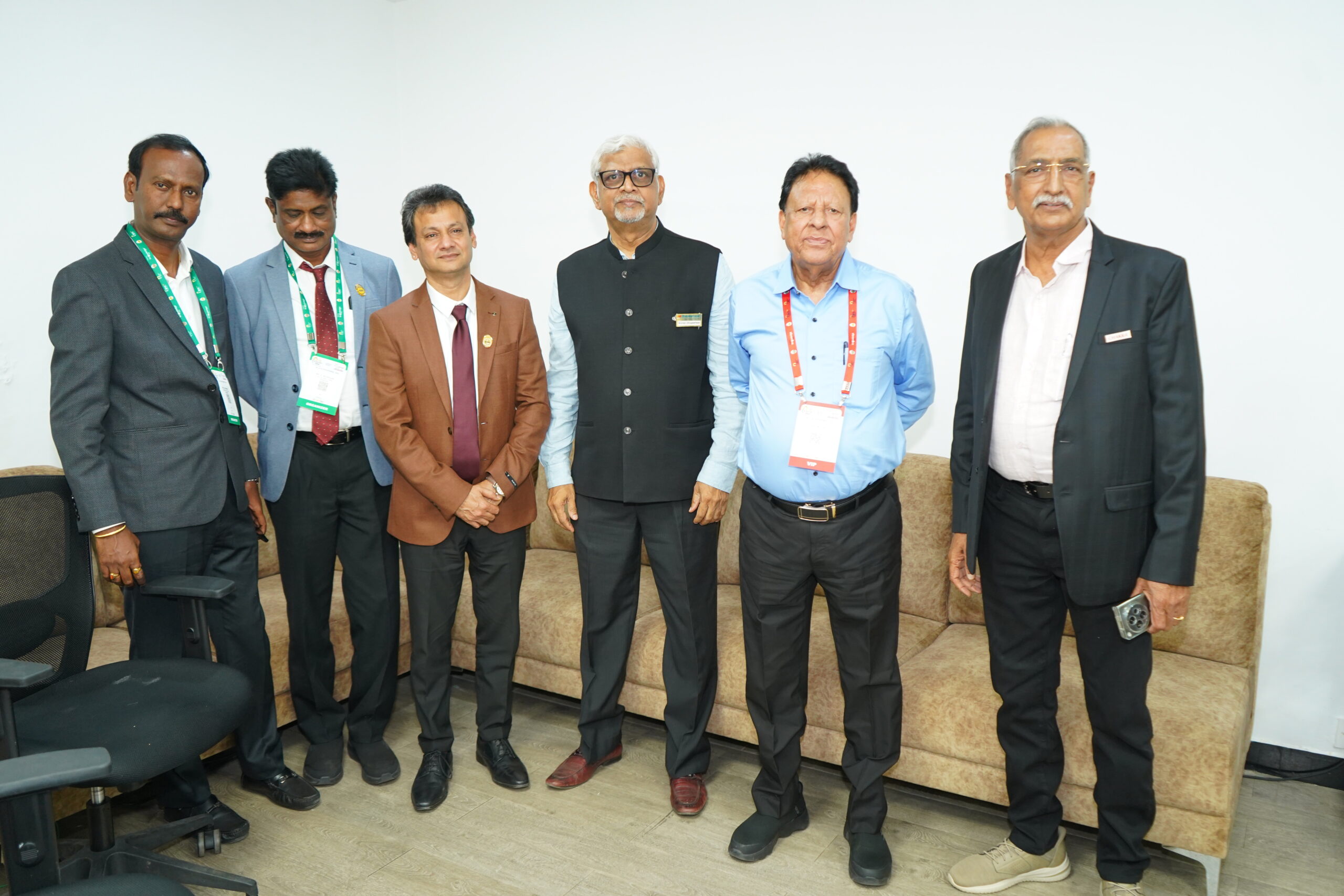
The Indian poultry sector is no longer playing catch-up with the world. Guided by leaders like Uday Singh Bayas, it is setting its own global benchmarks.
By Chandran Iyer
On a cool November morning in Hyderabad, as thousands of industry professionals streamed into the sprawling halls of the 17th Poultry India Expo 2025, one name echoed repeatedly across conversations, panels, and policy corridors—Uday Singh Bayas. For many, the Expo was not just an annual industry event; it was a reflection of a larger transformation underway in Indian poultry. And at the centre of that transformation stands Bayas, President of the Indian Poultry Equipment Manufacturers Association (IPEMA) and Poultry India, widely regarded as one of the most influential architects of the sector’s modern growth story.
With over three decades of hands-on industry experience, Bayas has quietly but decisively reshaped how poultry is perceived in India—from a fragmented, largely unorganised activity to a technology-driven, policy-recognised, globally connected agri-business sector. His leadership journey mirrors the evolution of Indian poultry itself: resilient, adaptive, and future-focused.
Building Institutions, Not Just Events
Under Bayas’ stewardship, IPEMA has emerged as a powerful national platform representing equipment manufacturers, technology providers, and allied stakeholders. What was once a niche association has today become a catalyst for innovation, collaboration, and policy advocacy. “Our role is not limited to representing manufacturers,” Bayas says. “We see ourselves as enablers of the entire poultry ecosystem—from farmers and integrators to researchers, policymakers, and global partners.”
This institutional vision finds its most visible expression in Poultry India Expo, now recognised as South Asia’s largest and most influential poultry exhibition. The recently concluded 17th edition in 2025 set new benchmarks, not merely in scale but in substance.
The numbers tell a compelling story: over 500 exhibitors from more than 50 countries, 51,251 industry visitors, and 35,000 square metres of exhibition space spread across seven global-standard halls. Yet, as Bayas is quick to point out, “The real success of Poultry India lies not in statistics, but in the value it delivers to every stakeholder who walks through its doors.”
A Truly Global Poultry Platform
What distinguished the 2025 edition was its unmistakably global character. More than 20 overseas poultry associations, 40+ national-level industry bodies, and 100+ mainstream and digital influencers converged in Hyderabad. Technology demonstrations stood shoulder to shoulder with policy discussions, while buyer–seller meetings seamlessly blended with knowledge-sharing forums.
The curated Poultry Knowledge Day, featuring 10 global speakers, addressed critical themes ranging from automation and biosecurity to sustainability and ESG compliance. “Our objective was to integrate scale with substance,” Bayas explains. “Whether you are a small farmer or a multinational manufacturer, the Expo must offer insights, opportunities, and practical solutions.”
This approach has turned Poultry India into far more than an exhibition—it is now a marketplace of ideas, partnerships, and policy dialogue.
India’s Competitive Edge in Global Poultry
India today ranks among the world’s leading producers of eggs and broiler meat, and Bayas believes the country’s competitive strengths are deeply structural. “We have a large and growing domestic market, an entrepreneurial farmer base, cost efficiencies, and rapidly improving technical expertise,” he notes.
Rising incomes, increasing health consciousness among the middle class, and growing awareness of protein-rich diets are fuelling sustained demand. At the same time, the sector is becoming increasingly organised and corporatised. Integrated farming models, buy-back agreements supported by established brands, and favourable government policies are creating stability and scalability.
“Poultry is one of the fastest technology-adopting livestock sectors in India,” Bayas adds. “Our adaptability to diverse agro-climatic conditions, combined with better genetics, feed formulations, and management practices, positions India strongly on the global stage.”
Technology as the Great Transformer
Walking through the Expo halls, the future of poultry was on full display—automation systems, precision feeding solutions, digital monitoring tools, advanced ventilation, sustainable housing designs, and waste-to-energy innovations. According to Bayas, these technologies will define the next phase of growth.
“Automation and digitalisation are no longer optional,” he asserts. “AI-integrated disease monitoring, data-driven farm management, and advanced biosecurity systems will be truly transformative. They improve productivity, reduce costs, and align the industry with global sustainability expectations.”
Such innovations are particularly critical as the sector navigates persistent challenges like disease management and raw material volatility. While biosecurity protocols and surveillance systems have improved significantly, issues related to vaccination policy and feed ingredient pricing—especially maize and soy—remain areas of concern.
“Preparedness today is far stronger than in the past,” Bayas says candidly. “But continuous vigilance, research, and policy engagement are essential.”
The Power of Policy and Government Support
A defining feature of Poultry India Expo 2025 was the strong presence of government leadership, underscoring poultry’s growing strategic importance. The event was graced by senior leaders including Shri Ponnam Prabhakar Goud, Shri Tummala Nageswara Rao, Shri Ponnala Lakshmaiah, Shri Gaddam Ranjith Reddy, and Dr. K. Lakshman, among others.
The consistent support of Telangana Chief Minister Anumula Revanth Reddy has been particularly significant. “When government leadership engages directly with industry, it accelerates innovation, infrastructure development, and long-term planning,” Bayas observes.
Policy frameworks at both state and national levels have strengthened the sector’s foundation. Telangana’s allocation of SEZs and Food Processing Parks for poultry-related enterprises—ranging from processed meat units to cold chains and egg-based products—has boosted employment and value addition. National initiatives under the National Livestock Mission, priority sector lending norms, and cold-chain infrastructure support have further enabled inclusive growth, especially for SHGs and backyard farmers.
Bridging the Technology Divide
Despite rapid modernisation, Bayas remains deeply conscious that small and medium farmers form the backbone of Indian poultry. One of Poultry India Expo’s most critical roles, he believes, is democratising access to technology.
“The Expo is a great leveller,” he says. “It gives grassroots farmers direct exposure to global innovations, expert guidance, live demonstrations, and peer learning.” Affordable solutions, practical workshops, and direct interactions with manufacturers ensure that progress is not confined to large integrators alone.
By bringing every link of the value chain under one roof, Poultry India has become a convergence platform where technology, trade, knowledge, and policy intersect—shaping a more inclusive and sustainable future.
Poultry and the Vision of Viksit Bharat 2047
Beyond economics, Bayas views poultry as central to India’s broader development goals. Affordable protein, micronutrient security, rural employment, and women’s livelihoods place poultry at the heart of food security.
“By improving efficiency, promoting egg and chicken consumption, and reducing wastage, poultry directly contributes to public health and economic resilience,” he says. “It aligns perfectly with the vision of Viksit Bharat 2047—a healthy, self-sustained nation.”
A Vision Beyond Today
Looking ahead, Bayas’ ambitions remain characteristically expansive. His vision is to evolve Poultry India into the world’s largest and most influential global poultry platform, while positioning IPEMA as a driver of technology adoption, policy advocacy, and capacity building.
To young professionals, his message is both pragmatic and inspiring: “Poultry is a sunrise sector. Consumption is growing steadily at over 6% annually, and opportunities abound in technology, sustainability, entrepreneurship, research, and global trade. Those who innovate, stay ethical, and think long-term will shape the future of this industry.”
As the lights dimmed on the 17th Poultry India Expo and exhibitors packed up their booths, one thing was unmistakably clear—the Indian poultry sector is no longer playing catch-up with the world. Guided by leaders like Uday Singh Bayas, it is setting its own global benchmarks. And in that journey, Bayas’ greatest legacy may well be not the institutions he built or the records he broke, but the confidence he instilled in an industry ready to soar.