By Chandran Iyer
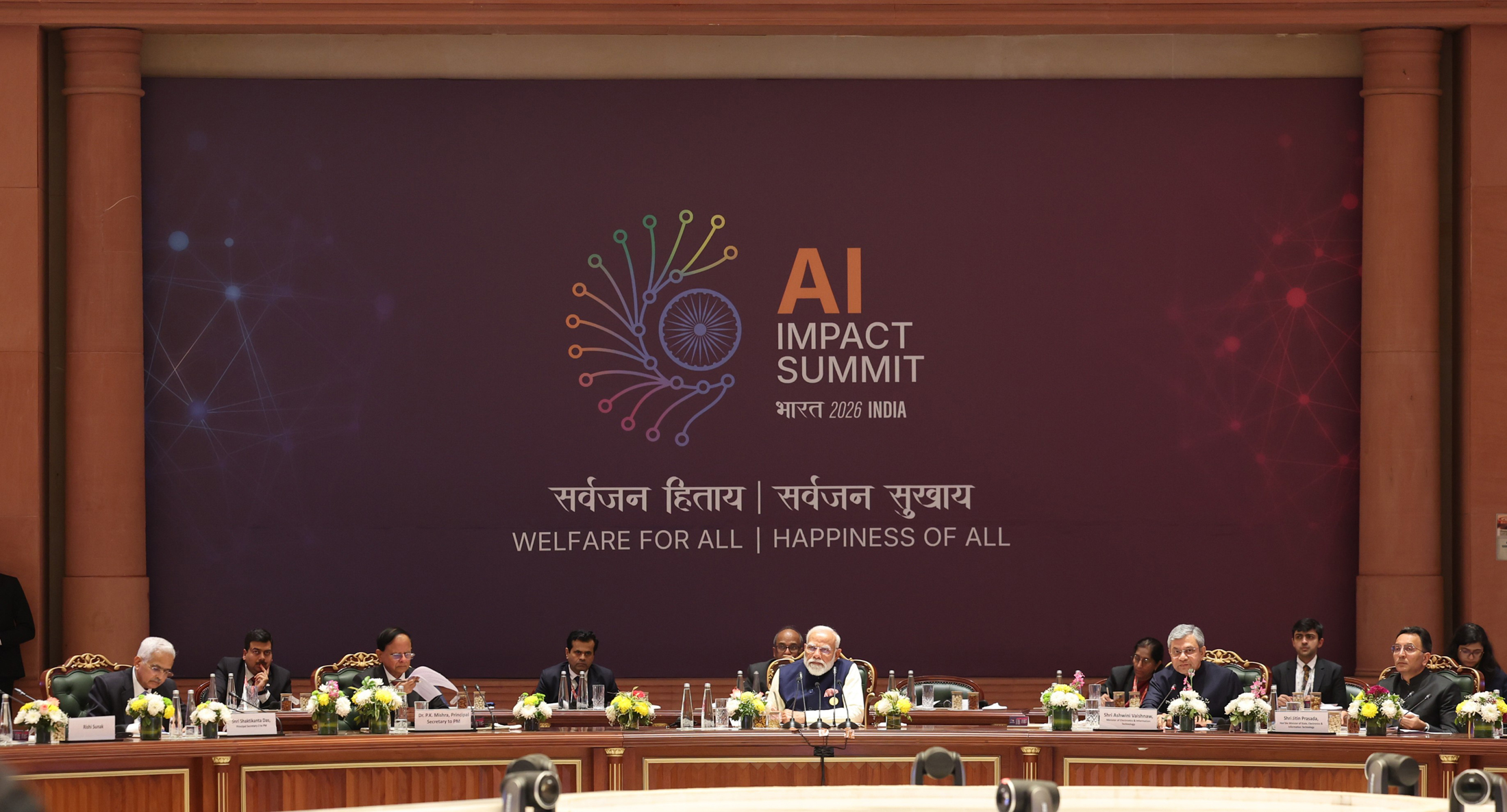
When India hosted the landmark India AI Impact Summit 2026 at Bharat Mandapam in New Delhi, it marked a defining moment in the country’s technological journey. Over 70 countries signed a common declaration, and more than 2.5 lakh participants registered for the event — an extraordinary demonstration of global trust in India’s vision for artificial intelligence. Leaders, policymakers, technologists, and entrepreneurs gathered to discuss how AI could be made inclusive, ethical, and transformative, particularly for the Global South.
Yet, despite the scale and substance of the summit, much of the mainstream and social media discourse was dominated by a controversy involving Galgotias University. The Noida-based institution faced backlash after a robotic dog displayed at its stall — identified online as the Go2 model by Unitree Robotics — was allegedly presented as an indigenous innovation named “Orion.” The university later clarified that its representative had been “ill-informed” and apologised for the confusion, even vacating its stall after being directed by authorities.
The incident snowballed into memes, mockery, and accusations of national embarrassment. What should have been a footnote became the headline.
This episode is a classic illustration of what radio host Dennis Prager calls the “Missing Tile Syndrome.” The concept refers to our psychological tendency to fixate on what is missing or flawed, rather than appreciating what is intact and functioning beautifully. Like staring at a single missing tile in an otherwise magnificent ceiling, we allow one imperfection to dominate our perception of the whole.
The AI Summit was, by any objective measure, a success. Its core message — AI for All — emphasized democratizing artificial intelligence so that its benefits extend beyond developed economies to emerging nations. In a world increasingly shaped by algorithms and automation, ensuring equitable access to AI tools is not merely aspirational; it is essential.
Equally significant were the discussions on Responsible AI. Policymakers and experts stressed transparency, accountability, and democratic oversight of AI systems. At a time when concerns about data privacy, bias, and misinformation loom large, these conversations were both timely and necessary. India positioned itself not just as a technology adopter, but as a thought leader advocating human-centric innovation.
The summit also witnessed major investment announcements. Global technology leader Microsoft and Indian conglomerate Reliance Industries pledged significant investments in AI infrastructure and development. These commitments signal confidence in India’s digital ecosystem and its ambition to become a global AI powerhouse.
And yet, public attention gravitated toward a single controversy.
This pattern is not unique to events of national importance. In everyday life, we often allow trivial shortcomings to overshadow broader blessings. A professional may dwell endlessly on one missed promotion despite years of steady growth. A student may obsess over a single lower grade while ignoring consistent academic excellence. A person in good health may fixate on minor cosmetic imperfections. In relationships, partners sometimes focus on a single irritating habit rather than the foundation of trust and affection that sustains them.
The human mind appears wired to magnify flaws. Negativity is more clickable, more shareable, more emotionally stimulating. Social media algorithms amplify outrage and ridicule far more than nuanced appreciation. As a result, complex achievements are reduced to viral moments.
This is precisely why the Missing Tile Syndrome is so dangerous. It distorts proportion. It erodes gratitude. It narrows perspective.
The Galgotias episode, while unfortunate, was ultimately an isolated lapse. The university issued clarifications and apologies. No evidence suggests systemic fraud or national-level misconduct. In the grand scheme of a summit involving dozens of nations and hundreds of thousands of participants, it was a minor disruption.
By contrast, the summit’s broader achievements carry long-term implications. The declaration signed by over 70 countries signals a growing consensus on collaborative AI governance. The emphasis on inclusion strengthens India’s moral and strategic leadership in technology diplomacy. Investment commitments translate into jobs, research, infrastructure, and innovation ecosystems that will shape the country’s economic future.
If we allow a single controversy to define the narrative, we risk undervaluing historic progress. Worse, we risk discouraging institutions and innovators who are striving to contribute meaningfully.
A mature national discourse must be capable of both accountability and perspective. It is right to question inaccuracies. It is also wise to recognize scale and context. Not every misstep deserves to eclipse a milestone.
The India AI Impact Summit 2026 represented ambition, collaboration, and vision. It showcased India’s determination to ensure that artificial intelligence serves humanity rather than divides it. Instead of letting one missing tile distract us, we would do better to step back and admire the vast, intricate ceiling being built — one that reflects innovation, inclusivity, and responsible progress.
In life, as in national events, happiness and pride depend on what we choose to focus on. The tile matters. But the ceiling matters far more.