
By Chandran Iyer
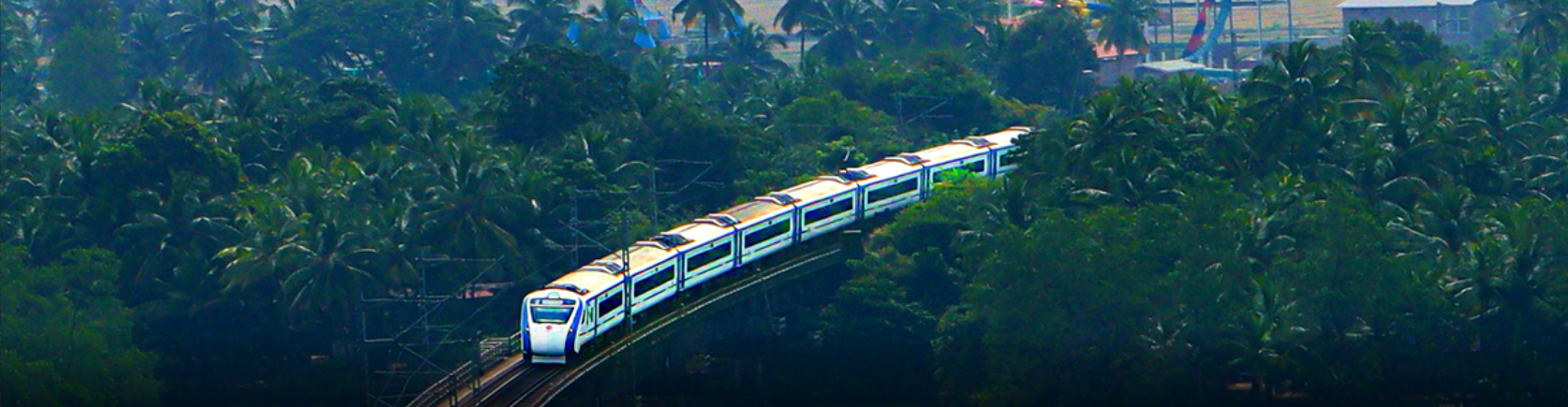
I had always heard of the Konkan Railway being described as one of the most enchanting train journeys in India, but it was only this year, during the monsoon, that I truly experienced its magic. When I boarded the train, little did I know that the 740-kilometre route connecting Mumbai to Mangaluru would unfold before me as a symphony of nature’s grandeur and human engineering brilliance.
The first sight that struck me was the landscape itself. The train moved past lush green valleys, mist-covered mountains, and paddy fields shimmering under the drizzle. Soon after, rivers began to crisscross our path, their waters swollen with the rains, flowing with a newfound urgency. Every turn seemed to open into a new world—towering cliffs, gurgling streams, and majestic waterfalls cascading down slopes as though the monsoon had unlocked secret treasures hidden within the Sahyadris.
What makes this journey unique is the sheer scale of its engineering marvels. The Konkan Railway crosses a total of 2286 bridges and passes through 91 tunnels, cutting across 146 rivers on its way to the southern coast. At every crossing, I found myself glued to the window, in awe of the human effort that made this possible. Without the bridges, rivers like Vashishti, Sharavathi, and Zuari would have been impassable; without the tunnels, the stubborn mountains of the Western Ghats would have remained barriers. The Karbude Tunnel near Ratnagiri, stretching 6.5 kilometres, felt like entering a mountain’s heartbeat before re-emerging into light. As the train snaked through these feats of engineering, it was clear to me why the Konkan Railway is hailed not just as a scenic route but as an engineering triumph.
Yet, what impressed me even more was not just the grandeur of what was built, but the care with which it continues to be preserved. Traveling through the Konkan in the monsoon is a test of resilience, for both nature and man. As the train curved around rain-soaked hillsides, I noticed carefully engineered slope stabilization measures, reinforced embankments and retaining walls, holding the earth firmly in place, a reminder that behind every verdant incline lies immense planning and effort. Subtle signs of vigilance were everywhere: LED signals guiding trains through low light and fog, self-recording rain gauges at nine stations keeping track of rainfall, and flood warning systems on key bridges over the Kali, Savitri, and Vashishti rivers, ready to alert officials if waters rose dangerously. Even the wind is watched closely—anemometers on major viaducts and bridges, measure gusts to ensure safe passage. Behind the scenic beauty lies a network of technology-driven safeguards, monitoring slopes, tunnels, rivers, and weather, working tirelessly so that this journey through paradise remains as safe as it is breathtaking.
I later learned that KRCL also operates tunnel ventilation control rooms and enhanced patrolling systems to ensure that this paradise remains safe for travelers. During heavy rains, dedicated teams patrol vulnerable stretches, using advanced instruments to detect potential hazards long before they can pose a threat. As I sat gazing out at the mist-shrouded valleys and cascading waterfalls, it was reassuring to know that while I was lost in the beauty outside my window, an invisible network of vigilance was quietly safeguarding every turn of the journey.
The monsoon season, often seen as challenging for railways, transforms the Konkan route into an ethereal experience. As rain lashed against the windows, waterfalls appeared out of nowhere—white streams tumbling down cliffs and merging into valleys below. Some of these waterfalls are so close to the tracks that it felt like the train was brushing past their spray. At times, I couldn’t help but feel as if the train was gliding through clouds. The tunnels added to the drama; each time we plunged into darkness, anticipation built up, only to be rewarded with a breathtaking view on the other side.
There is something spiritual about watching rivers in spate while crossing bridges that seem suspended in mid-air. The vastness of the Sharavathi River or the quiet charm of smaller streams reminded me of how this land is woven together by water. The Konkan Railway doesn’t just traverse geography—it embraces it, adapting to every twist and turn of nature.
As I sat with my cup of hot chai in the train’s pantry, I thought about the history of this route. The Konkan Railway was once the missing link between Mumbai, India’s bustling commercial capital, and Mangaluru, the gateway to southern trade. The dream of connecting Maharashtra, Goa, and Karnataka was not just about convenience—it was about bridging communities, cultures, and commerce. Today, with 72 stations along the way, the train glides effortlessly across mountains and rivers, making it easy to forget the struggles faced by engineers and workers who carved this route through some of India’s most challenging terrain.
Traveling through Goa was a delight in itself—the train cut across stretches where palm groves leaned towards the tracks and the sea winked at us from a distance. The salty breeze mixed with the earthy scent of rain-drenched soil, creating an intoxicating aroma that no perfume could replicate. Each station felt like a gateway to a different world—small towns, sleepy villages, and coastal settlements that thrive on the opportunities the railway provides.
But what stayed with me most was the balance that KRCL maintains between engineering and ecology. Instead of taming nature, the Konkan Railway seems to have made peace with it. The slope stabilization, rain shelters, and continuous monitoring are not acts of domination but of respect—acknowledgment that the Western Ghats are both majestic and unpredictable. It is this respect that makes the journey not only safe but also sustainable.
As the train approached Mangaluru, I felt a mix of exhilaration and nostalgia. Exhilaration because I had just witnessed one of the most beautiful rail journeys in the world; nostalgia because I knew I would carry these images with me long after the trip ended—the roaring waterfalls, the misty tunnels, the endless green valleys, and the assurance that human ingenuity can coexist harmoniously with nature.
The Konkan Railway is more than just a transport link—it is a celebration of India’s landscapes and the spirit of innovation. It reminds us that journeys are not only about reaching destinations but about experiencing the world in all its raw beauty and resilience.
Today, that same spirit of innovation continues beyond the tracks. Konkan Railway has transformed its hard-earned expertise in tunnelling and construction into a centre of excellence for the nation. In 2017, it established the George Fernandes Institute of Tunnel Technology (GFITT) to share this experience with engineers from across India and abroad. Collaborations with institutions such as the Hagerbach Test Gallery, ETH Zurich, and IIT Mumbai allow GFITT to offer specialized training in tunnel design, construction, and maintenance.
The very challenges that once tested KRCL, unstable slopes, complex geology, and relentless monsoons, are now lessons it passes on. Engineers who once conquered the Western Ghats now mentor others, and projects like the Udhampur–Srinagar–Baramulla Rail Link benefit from their expertise. From carving tunnels through mountains to shaping knowledge for the future, Konkan Railway has come full circle, a testament to perseverance, innovation, and the power of shared learning.
I discovered this later, while reading more about the route that had so deeply moved me. It felt almost poetic, the same organization that once battled landslides now equips others to face the very same challenges. What I had admired from my window was not just beauty; it was decades of expertise, quietly shaping the future.
If there is one train journey I would recommend to every traveler, it is this. Take it during the monsoon if you can. Sit by the window and watch the rain transform the Sahyadris into silver streams and emerald fields. Let your eyes wander across the countless bridges and tunnels, and follow the rivers as they carve their timeless paths through the landscape. Trust in the invisible guardians of KRCL, quietly at work to keep the journey safe. And then, as the train winds through mist and light, allow yourself to surrender, not merely to a train ride, but to the sense that you are gliding through a living, breathing paradise.
